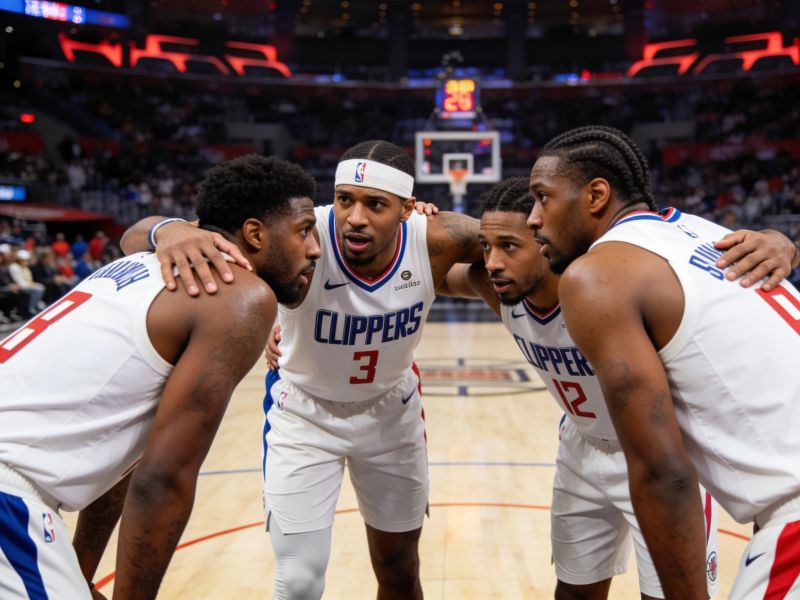
he LA Clippers have never been shy about swinging for the fences. Since Steve Ballmer took over as owner in 2014, the franchise has repeatedly reshaped its Clippers roster in pursuit of a championship. The 2019 acquisition of Kawhi Leonard and Paul George was the boldest move yet, but the supporting cast around them has been a constant work in progress—sometimes brilliant。sometimes baffling. This season's Clippers roster feels different, though. It's deeper, more balanced, and finally built around the strengths of its two stars rather than forcing them into uncomfortable roles.Start with the backcourt. Russell Westbrook's decision to come off the bench early in the season was a turning point. I watched him against the Nuggets in mid-December—he pushed the pace, attacked the rim, and didn't force a single contested three. That version of Westbrook is a luxury。
not a liability. Terance Mann has quietly become one of the most reliable wing defenders in the West, and Norman Powell is a walking bucket off the bench. The Clippers roster finally has guards who can defend, shoot, and initiate without needing the ball in their hands 24/7. James Harden, for all the skepticism, has settled into a pass-first role that suits his aging legs. His pick-and-roll chemistry with Ivica Zubac is legit—Zubac is averaging career highs in points and rebounds, mostly because Harden actually looks for him.The frontcourt is where the Clippers roster gets interesting. Kawhi Leonard remains the anchor, but his load management is no longer a dirty word—it's a strategy. When he plays, he's still a top-five two-way player. Paul George's shot selection has been maddening at times (those early-clock pull-up threes), yet his defensive versatility is irreplaceable. The real revelation has been the emergence of Amir Coffey and the steady hand of Nicolas Batum。who at 35 still makes the right rotation every time. Mason Plumlee's energy off the bench gives them a different look. This isn't a roster of superstars;it's a roster of specialists who know their jobs.What strikes me most about the Clippers roster construction is how it mirrors the modern NBA's obsession with optionality. They can go big with Zubac and Plumlee, small with Leonard at the five, or switch everything with Batum and Mann. That flexibility matters in the playoffs, where matchups change series by series. The front office didn't chase names last summer;
they chased fit. P.J. Tucker's arrival was less about his minutes and more about his voice in the locker room. Bones Hyland is a wild card—electric scorer, defensive liability—but on a roster this deep, you can hide him. The Clippers roster isn't perfect. Health remains the eternal question mark。and Harden's playoff track record is what it is. But for the first time in years, the pieces make sense together.
Watch a Clippers game and you'll notice something: the ball moves. There's no hero-ball epidemic. Leonard and George trust the system, and the role players reward that trust. The Clippers roster has evolved from a collection of talent into an actual team. That's not a small thing in a league where chemistry often trumps star power. The West is a gauntlet—Denver, Phoenix。Minnesota, Oklahoma City—but the Clippers have the depth, the defensive versatility, and the veteran savvy to survive it. Whether they do is another story. For now, the Clippers roster is the most coherent it's been since Ballmer bought the team. That alone is worth paying attention to.