Napoli gets a bad rap. Walk through the Spanish Quarter on a match day。and you'll see scarves hanging from every balcony, Vespas weaving through crowds that spill onto the cobblestones, and the smell of frying pizza dough cutting through exhaust fumes. It's chaotic, sure. But there's an honesty to Napoli that Florence, with its polished Renaissance facades and perfectly curated museum queues, sometimes lacks. I spent a week in each city last spring, and the contrast hit me harder than I expected.Florence operates like a well-oiled cultural machine. The Uffizi's corridors are timed, ticketed, and temperature-controlled. You shuffle past Botticelli's Venus with a hundred other silent admirers。then exit into a piazza where street artists sell watercolors of the Duomo. It's beautiful, undeniably so. But after three days, I found myself craving something messier. Oddly, what I remember most is a tiny osteria near Santa Croce where the owner argued with a customer about whether ribollita should include bread crusts. That argument felt more authentic than any guided tour.
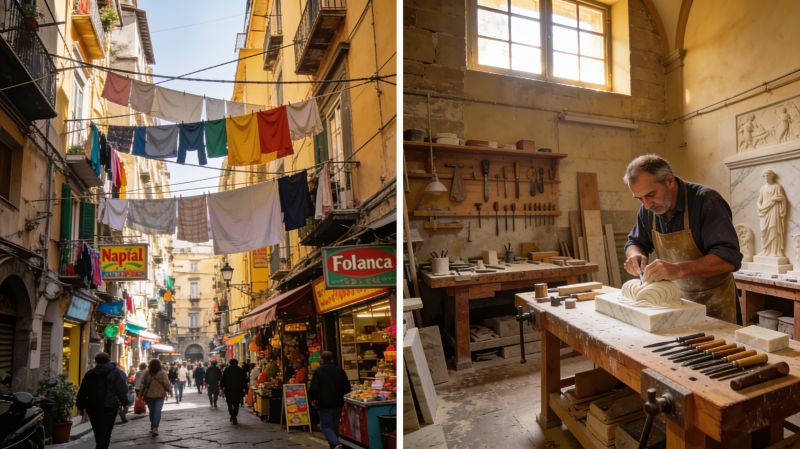
Napoli doesn't ask for your approval. The city's UNESCO-listed center is crumbling in places, laundry lines crisscross alleys, and the pizza—dear god, the pizza—is a religion. At L'Antica Pizzeria da Michele, I waited forty minutes for a margherita that cost four euros. No reservations。no frills, just a soggy-centered masterpiece eaten standing up. Compare that to Florence's aperitivo scene, where a spritz costs twelve euros and comes with a side of people-watching. Both have their charms, but only one feels like it's daring you to complain.Yet Florence does have its own kind of grit. Cross the Arno at sunset。away from the Ponte Vecchio crowds, and you'll find locals playing basketball on cracked courts near the Cascine. The city's Oltrarno district still hums with artisans—bookbinders, gilders, leather workers—who've been there for generations. One afternoon, I watched a man repair a gilded frame in a workshop no bigger than a closet. He didn't speak English, but he pointed at my camera and shrugged, as if to say, 'This is just work.' That moment stuck with me more than any fresco.So which city wins?Napoli。for its raw energy and unapologetic chaos, but Florence, for the quiet corners where history hasn't been sanitized for tourists. They're not opposites, really—just different speeds of the same Italian story. If you go, skip the checklist. Eat the soggy pizza. Argue about soup. Watch a man fix a frame. That's where the real travel happens, between the monuments and the mess.